6/30/2009

See the Movie

       Like the book, the movie "War and Peace" is a bit long. But at only 3 hours and 18 minutes, it is certainly more efficient use of one's time than reading the book. 
       I am usually disappointed when I watch a movie adaptation after reading a book. But not with "War and Peace". I was almost giggling at how succinctly characters explained how they were feeling compared to the pages and pages and pages of description in the book.  In my view, the film's writers did a great job of capturing many of the key elements in the book, and for those who want to know the epic tale without investing a month of valuable reading time, I would strongly recommend the film.
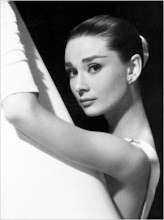
       It didn't hurt that Audrey Hepburn was absolutely adorable in the role of Natasha. Although she was 26 years old in real life, and married to her co-star Mel Ferrer, she portrayed a 16 to 18-year-old in love far better than Tolstoy was able to in his writing.  And one of the scenes -- a cavalry charge with perhaps a thousand riders galloping past, and shot in "Vistavision" -- was damned impressive, especially since none of the soldiers were computer-generated.

       And one thing about the movie made me feel more forgiving about the book -- parts of the movie were quite dated. Some of the scenes were so clearly shot on a cheap sound stage that Tom and I couldn't help laughing. And the special effects were primitive compared to today's -- explosions that were mere flashes of light, cannons that failed to recoil after firing, deaths that were bloodless. 
       But the fact is that the movie was made more than 50 years ago, and a great deal of film-making innovation has happened since then. 
       Perhaps in the same way, the book "War and Peace" simply is somewhat dated. Like film-making, writing styles and modes of expression have evolved in the more than 150 years since it was written. Indeed, at the time it was first published, "War and Peace" actually was considered a truly modern book -- one that portrayed a more realistic world than was common in the romantic and picaresque novels of the time.  Through my 21st-century eyes, this once important book seemed repetitive and often pedantic. But perhaps the simple fact is that it, understandably, is no longer modern.

       And I am glad I read it. Not only can I say that I have read "War and Peace" and even enjoyed parts of it, the book also helped me get though a stressful month. 
       Now, I'm excited to get to work on the next chapter in my life!

6/29/2009

Freedom to Read

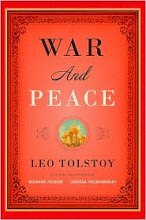
       This morning, I finished "War and Peace". All of it. Really.
       And this afternoon, we found out that we are getting the house we have been coveting for months.  
       Coincidence? Well...probably. But it's fun to think there might be some connection. If only I had known that's what fate was waiting for, I would have finished "War and Peace" earlier in the month.

        The epilogues in "War and Peace" were even more annoying than I had expected. The first one explained what happened to the characters in the years following the end of the book. Told more like a book outline, or even like a series of obituaries (what the characters accomplished, how they were viewed by others, etc.) it lacked even the small amount of charm found in the main part of the book. The second epilogue was directed mainly to explaining that while humans think they have free will, they in fact do not
        And then, to my surprise, the second epilogue was followed by an "appendix" written by Tolstoy.
        It was while reading this appendix that I finally realized what will keep me from thinking of "War and Peace" as one of the greatest books I have ever read.  In it, Tolstoy wrote that he spent five years of "ceaseless and exclusive labor" on the book and that he wanted to state his view of the book -- to remove any "perplexities which may arise in readers". Tolstoy wrote that he did not want readers "to see or seek in my book what I did not want...to express, and to pay attention to precisely what I wanted to express."  
       That is, Tolstoy wanted to ensure that readers saw the book only precisely as he intended. He wanted to ensure that readers did not seek, or have, free will in reading his book -- just as he says we lack it in the rest of our lives.
       To me, that takes away one of the essential joys of reading.  
       Emerson wrote, "'Tis the good reader that makes the good book; in every book he finds passages which seem confidences or asides hidden from all else..."
       Tolstoy seemed determined to obliterate this role of the "good reader". With his constant repetitions, his long-winded explanations of otherwise clever similes, his on-going re-statement of the book's themes, and especially with his epilogues, Tolstoy was taking away from the reader the best part of reading -- a sense of discovery, pleasure and imagination
       "War and Peace" did give me some insights into war that I may never forget. And some of the character descriptions were marvelous. But too much of it seemed like a lecture by a doddering professor who is overly committed to his own viewpoint.  
       I wish Tolstoy had thought enough of his readers to allow them to think, at least a little bit, for themselves.

       Tonight, Tom and I are sitting down to watch the movie "War and Peace".  Made in 1956, it stars Audrey Hepburn, Henry Fonda and Mel Ferrer.  I'll write about that tomorrow...

6/25/2009

I Don't Want To...

       I finished the main part of "War and Peace" today, and I feel satisfied with it. I really do. The ending was interesting, with some hints of the future lives of the characters and of the country. A story had been told, albeit a bit repetitiously.  I feel done.
       So how am I going to get through the next 150 pages? I really, really don't want to continue.  
       So why did Tolstoy? Why couldn't he just have stopped at page 1125? Wasn't that enough? 
       I guess I'm going to have to dig in and find out.

6/24/2009

Editor Needed

       I have been zipping through "War and Peace" and in less than 50 pages, will be at page 1125, the end of the main part of the book.  
       Through the 1078 pages I have read so far, one thing has become increasingly clear.     Tolstoy seriously needed an editor -- someone with a bold red pencil -- who would slash her way through the book and help bring it into shape.
       Tolstoy is guilty of incredible amounts of repetition, restatement and re-explanation. He will make a statement -- occasionally a profound one or simply a nice turn of phrase -- and then will say it again. Once he says it, he repeats it. After making a statement, he will explain what he meant by saying the statement. He often seems to think that perhaps we missed the statement or failed to understand it the first time around, so he says it again. And then, perhaps one page or 10 pages or 50 pages later, he'll say it again -- the same statement -- although sometimes with the phrases reversed.  All over again he'll say it, and then again he'll explain it.  
       Can you imagine how annoying that might be?
       Writers sometimes fall in love with their work, and can't bear the thought of changing even one word.  Or they sometimes think something is so brilliant that it bears repeating. That is when an objective editor is most needed -- to forcibly cut out some material to help make a book lean and fit instead of bloated.

       I have peeked ahead to see that at the end of the main part of the book, there are two epilogues written by Tolstoy that go on for an additional 150 pages. And I am guessing that large portions of them will be taken up with explanations of the book I have just spent much of this month reading. I am considering taking a red pencil to these pages myself, just to see how many of them are left after some masterful slashing. 
       Or would that be a rude thing to do to a "great" novel?

6/22/2009

Anniversary Reading

       Tom and I went to San Francisco this past weekend, to celebrate our 15th wedding anniversary. As I was leaving our home Thursday evening with my luggage in one hand and "War and Peace" in the other, Tom said, "You're not bringing that, are you?"  Because I didn't want Tom to think that his love and attention wouldn't be enough to joyfully pass the time on our celebration weekend, I abruptly decided to leave the 3 lb. volume at home.
       By the time we got into our car, I was already having regrets.
       At the airport, waiting for the plane, I bought an Oprah magazine. It didn't come close to replacing "War and Peace". On the plane, however, the SkyMall magazine did a better job, and Tom and I had fun laughing at items to buy for our possible future home. Our favorite choice was called "The Zombie of Montclaire" a "life-size, gray-toned zombie [that] will claw his way out of your garden... pleading for assistance with the most lifelike eyes you've ever seen."
       Once in San Francisco, we kept pretty busy -- even without books to read. But I did find myself thinking about "War and Peace" occasionally. 
       At the opera, La Traviata, for instance, I thought about how families interfere with true love in both the opera and in "War and Peace" -- but not, happily, in my marriage.  When I caught a chill on Friday night, I thought about Russian and French soldiers trying to survive in much worse conditions in the fall of 1812, as foreshadowed by Tolstoy. When we went out for sushi on Saturday, I didn't think about "War and Peace" at all, but only because I tend to find sushi incredibly absorbing. 
       But on the trip home, I seriously missed my "War and Peace". I had already read SkyMall, Oprah and the airline magazine. More importantly, Prince Andrei had been seriously wounded just before I flew to San Francisco, and I wondered how he was faring. And Pierre, who was not a soldier, had been dug in with troops at the front line, and was in danger of being hit by cannon fire. The trip home, even with the love of my life beside me, seemed incredibly long.
       Somehow, after 800 pages, "War and Peace" had become an integral part of my life -- for this month at least. Perhaps, like marriage, "War and Peace" is a journey of discovery, growth and unexpected pleasures.

6/19/2009

War and Peace and Banana Peels

       Something completely unexpected happened to me the other day while reading “War and Peace".
       I found myself being amused. Actually, I was more than amused. “War and Peace” abruptly started to seem rather funny.
       Three scenes in a row seemed to suggest that maybe I had done a disservice to Count Tolstoy in my interpretation of the book. First, there was a scene were Prince Andrei chased down a French soldier, and after merely nicking him in the arm, captured the terrified man. Although Andrei was troubled by how easily this happened, he was awarded a medal of honor. Next there was a scene where Natasha, trying to pray piously in church, was told to pray for and forgive her enemies. But a moment later, she was instructed to pray for the destruction of her ememies, and good Natasha found herself at a bit of a loss. Next, Pierre, who had developed an interest in numerology, found that when he attached numerical figures to the letters of the alphabet and then spelled out his name, the letters of his name added up to an auspicious number – but only if Pierre not only misspelled his name, but also added an adjective to the front of it (“La Russe”).
       Suddenly, it appeared that dour Count Tolstoy had a bit of a sense of humor. Indeed, it suddenly seemed that “War and Peace” had turned into a series of clever, yet dry, Monty Python sketches.
       Rather than being a burden, the book abruptly started to move faster. And I found myself snorting or shaking my head as the next 100 pages flew by.
       I wonder now, if by thinking of “War and Peace” as a great and serious novel, I had closed my mind to thinking of it as a sly and ironic one.
       And I find myself wondering what, in my serious frame of mind, I had missed in the previous 700 pages. I have half a mind to go back to the beginning to give War and Peace a whole fresh look. Well, maybe that's over-stating it a bit. Maybe it’s a quarter of a mind. Or maybe an eighth. No, surely, it’s more of a sixteenth.
       Okay, so I may never go back to the beginning. But I am beginning to sense that I might at least enjoy the final 400 pages.

6/15/2009

Making Progress

       A few people have asked if all this talk about great books is meant to distract attention away from the fact I am not reading "War and Peace".
       I ask you, seriously, would I do something like that?
       No! Really, I wouldn't!
       In fact, I am continuing to work my way through this rather heavy book.
       In fact, I am on page 655, out of 1215 pages. Yes, that means that I am more than halfway through, which is a good thing given that the month is half over.
       I can promise that I will finish the book by the end of the month. I know it will happen. I have made a promise and I will see it through. Each page I turn is bringing me closer to the end.
       I'm not exactly proud though that I'm talking about "War and Peace" this way. I am generally more into the story, or the characters, or the beauty of the language, in a work of fiction than I am into counting pages. I guess that means that "War and Peace" still is not feeling like a great book to me.
       I'll admit that 655 pages into it, I do feel a slight interest in the lives of the characters. What will happen to the lovely and enchanting Natasha? Will Prince Andrei find love again? Will anyone ever understand poor Pierre? I even feel a vague curiosity about how the Russian army will deal with Napoleon. Starting around 50 pages ago, I found myself picking up the book at odd times -- trying to read just a few more pages, trying to find out what happens next.
       But when you think about it, isn't it a bit much to ask that someone read 600 pages before beginning to care about the characters? Most books, in their entirety, are not that long. This is an era of reduced attention spans. And in general, I try to have reading feel like less of a burden.
       I do hope that by time I get through the book, I will have experienced more greatness in "War and Peace" than simply a sense of accomplishment at a task completed.